
Garden Grove Previous Residents by Era
The strongest address history uses a source that fits the era. A current parcel and deed can anchor ownership. A directory or census schedule can place a household at a date. A permit can date work at the structure without naming every occupant. The record trail crosses city, county, library, archive, and federal collections because Garden Grove incorporated later than the community first appeared in directories and maps.
| Source | Years it covers | Where held | What it shows |
|---|---|---|---|
| Garden Grove Sanborn map | 1915 | Library of Congress | Building footprint, use, and historic street labels; not resident names |
| Orange County directories including Garden Grove | 1926, 1929, 1931 | NARA-listed directory holdings and microfilm | Alphabetic resident or business entries before incorporation |
| Federal census | Released through 1950 | NARA and genealogy databases | Households, relationships, ages, occupations, and roads; 1930 pairs well with 1929 |
| Garden Grove city records | June 18, 1956 forward | City Clerk archives and request portal | Municipal actions, annexation, permits, and policy records |
| Haines cross-cross directories | 1981, 1983 to 1986, 1988 | LA County Library Californiana in Norwalk | Address-to-occupant and telephone reference |
| Recorded documents | County history; exact online index start not stated | Orange County Clerk-Recorder | Ownership chain, legal descriptions, and instrument references |
| Building records | Varies by property | Garden Grove Building and Safety | Work dates, applicants, contractors, and plans when releasable |
For a recent address, begin with the parcel, APN, legal description, and current deed. For a pre-incorporation question, use county directories, the census, Sanborn mapping, and Orange County archival context. For an owner who lived at the property in the 1980s, Haines reverse coverage may connect a house number to an occupant. The table is an era map, not a claim that every volume contains every household.
Garden Grove Deed Chain Backward
Ownership research starts with a parcel, not with a guess about who lived there. The Orange County Assessor property page connects address and APN work to parcel information and maps. When ownership is lawfully visible, use the current name as a seed in the Orange County Grantor/Grantee Index. The recorder's free web tool is an index only. It does not show document images, and staff do not perform an open-ended search by phone, mail, or in person.
- Normalize the current situs address and capture the APN, tract or lot information, and legal description from assessor or map sources.
- Search the current owner or entity as grantee in the recorder index within a plausible acquisition period.
- Match the candidate instrument to the Garden Grove legal description, then record the date, number, and grantor.
- Search that grantor as an earlier grantee, again matching the legal description rather than relying on the street number alone.
- Repeat the grantee-to-grantor loop until the record becomes ambiguous or reaches an earlier book, page, or predecessor jurisdiction.
- Order the specific copy only after collecting the instrument details needed by the Clerk-Recorder.
- Grantor
- The person or entity conveying or encumbering an interest in the recorded instrument.
- Grantee
- The person or entity receiving an interest, such as a buyer or a trust named in the instrument.
- Chain of title
- The linked sequence of recorded transfers used to follow an interest backward through earlier owners.
- Legal description
- The tract, lot, block, or other deed identity that can keep a property connected when a street label changes.
The Garden Grove street-address directory handles the current address-to-parcel sequence in more depth. Previous-resident work then uses that parcel seed to move backward through time.
Garden Grove Residents: Owner or Occupant
Previous residents cannot be inferred from an ownership chain alone. A recorded deed identifies an interest in land. A directory may list a person at a street address. A tax record may show a mailing contact. A permit may name an applicant or contractor. Each can be useful, but each answers a different question. A trust, company, or absentee owner can appear in a deed while a household member appears only in a directory, census, obituary, or other dated source.
| Record role | What it can support | What it cannot prove alone |
|---|---|---|
| Record owner or grantee | An ownership interest and transfer date | That the person lived at the situs |
| Directory occupant | A listed person at an address in a specific edition | Continuous presence or ownership |
| Tax mailing contact | Where a tax notice was sent | Physical residence at the parcel |
| Permit applicant or contractor | Association with work at a property | That the person was a household member |
| Entity, trustee, or representative | The legal capacity shown in a filing | A personal identity or household role |
This separation is the useful myth-buster in a Garden Grove address history. If a deed name and a directory name differ, preserve both labels and search for the bridge. A matching legal description, a spouse entry, an obituary, or a permit date can strengthen a conclusion. A similar name without a date, address, or role should remain an unresolved candidate.
Garden Grove Records on the 1915 Map
The 1915 Garden Grove Sanborn fire-insurance map is an early physical anchor. It can show a building footprint, use, and historic street labels, but it is not a resident directory. That distinction matters when a modern address seems absent from a search. The structure may predate the current number, or the old map may cover only part of the later parcel.
The Library of Congress scan of the 1915 Sanborn map belongs beside the legal description, not in place of it. Compare the map sheet with subdivision material, county directories, and the present GIS parcel. No verified citywide street-renumbering year was found in the research. Address changes therefore need case-by-case proof from labels, lot lines, deed descriptions, and dated directory sections.
Note: A Sanborn footprint can show that a structure or use existed; it cannot name an occupant or establish ownership.
Garden Grove Directories and Census
The verified pre-incorporation directory anchors are 1926, 1929, and 1931 Orange County volumes that include Garden Grove. The 1930 federal census supplies a close household check. Later, Haines Los Angeles South Suburban Cross-Cross editions cover 1981, 1983, 1984, 1985, 1986, and 1988. A criss-cross directory reverses the usual name-first path: the street and house number lead to an occupant or telephone entry. The collection details and shelf locations are described in the Garden Grove city directory collections page.
- Normalize the historical address, keeping the printed street spelling and any directional word.
- Read the 1929 or 1931 directory near the target name and pair it with the 1930 census enumeration.
- For an address-first search, read the Haines street section several numbers above and below the target.
- Photograph or note the title page and abbreviation key before interpreting entries such as h, r, emp, clk, or wid.
- Record first and last appearances, spouse or widow notation, occupation, and address changes without treating absence as proof of a move or death.
OCPL reference staff can search its catalog for Orange County directories, Garden Grove telephone volumes, Haines criss-cross material, yearbooks, newspapers, and licensed genealogy databases. The strongest fallback is outside the city: the LA County Library Californiana collection in Norwalk is the verified holding for the Haines years. Ask about access before promising a named entry, because the research did not locate an openly viewable scan of one.
Garden Grove Records Since 1956
Garden Grove municipal records begin with incorporation on June 18, 1956, not with the first settlement. The City Clerk preserves ordinances, resolutions, minutes, legislative actions, municipal elections, code material, and a request tracker. For an address history, the tracker can reveal earlier permit or property requests by showing the submitted date, department, due or closed date, and request text. Use the city records request portal for an identifiable series, date range, address, and electronic format.
Building and Safety is the municipal address source. Its permit and project page exposes inspections, project status, applications, violations, archived records, and GIS choices. The city warns that it does not hold plans for every property. A house-plan request should identify the address, after which staff explains any owner or architect authorization route. Planning's address form asks for requester details, site address, inquiry type, request text, and optional files; its stated response ranges are two business days for general inquiries, seven for cursory reviews, and four weeks for preliminary reviews.
The California Attorney General's public-records overview gives a useful public-access frame for a narrow request about an old Garden Grove address.
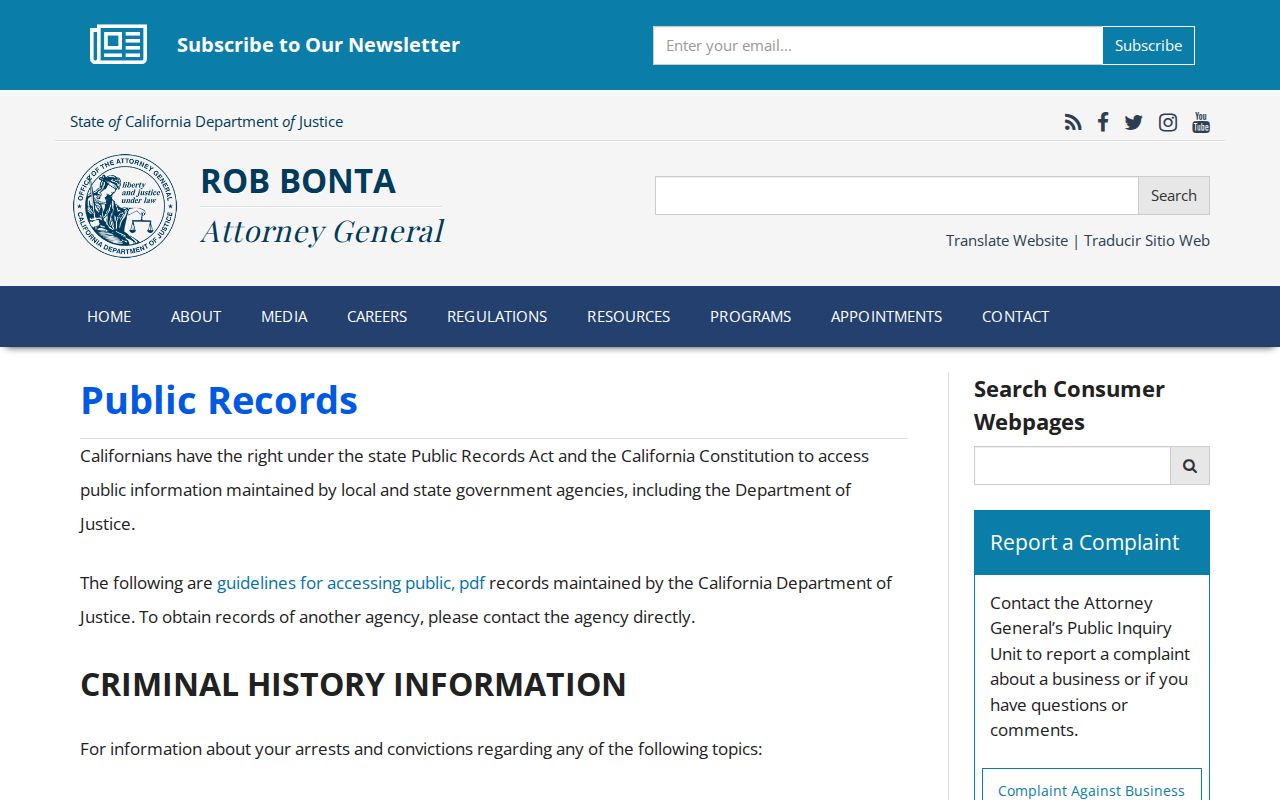
The image belongs with the request path, not with a claim that every municipal file is online. A request can identify a record system, while production may still require review, redaction, or a later response.
Garden Grove Deed Copy Keys
The Orange County recorder's practical cutoff is an instrument-number convention, not a claim about when recording began or when the online index starts. From 1982 forward, an instrument number uses the recording year plus six digits. For earlier documents, carry the record book, page, and instrument number when available. Because the free web results are identifiers only, a previous-resident search must preserve those keys before requesting a copy.
| Record stage | Identifier to keep | What happens next |
|---|---|---|
| 1982 and later index result | Instrument number using year plus six digits, party, type, and recording date | Use the number to request the recorded document |
| Pre-1982 index result | Book, page, instrument number when available, party, type, and date | Supply the older references with the copy request |
| Document copy request | Document or map number, page count if known, mailing details | Mail to the Clerk-Recorder or use the published counter route |
The Clerk-Recorder copy instructions list Orange County Clerk-Recorder, 601 North Ross Street, Santa Ana, California 92701, a self-addressed stamped envelope, and a check payable to County of Orange for mail requests. The published inspection fees are $1 per page plus $1 certification for each document or map. The recorder's phone is (714) 834-2500. Staff will not perform the name search for the researcher, so the index work comes first.
Do not call 1982 the start of the county record or promise an earliest online year. The research did not find an authoritative earliest web-index date. If a chain reaches Los Angeles County or rancho and land sources, document the Orange County seam first, then move to the predecessor custodian.
Garden Grove Resident Trail Endpoints
Previous residents often disappear from a directory because the household moved, the volume omitted the name, or a person died. An obituary can supply a death date, relatives, former communities, and an address clue. OCPL databases, the Orange County Register, local publications, funeral-home notices, and community or faith collections may preserve different pieces. Treat an obituary as a lead and confirm the death or relationship with the appropriate vital or court custodian.
Probate can close the ownership or heir trail, but its remote view is limited. The Orange County Superior Court may expose a case index or register while probate documents remain outside general remote access. Use the case number, party role, document title, and date when asking about a permitted copy. The court online-services gateway explains the difference between case access, index search, name search, and calendar modes. The Clerk-Recorder vital-records route supplies county copies under authorized or informational rules.
The California vital-records gateway is the state-level starting point when a death date or family link needs a formal record rather than an obituary lead.
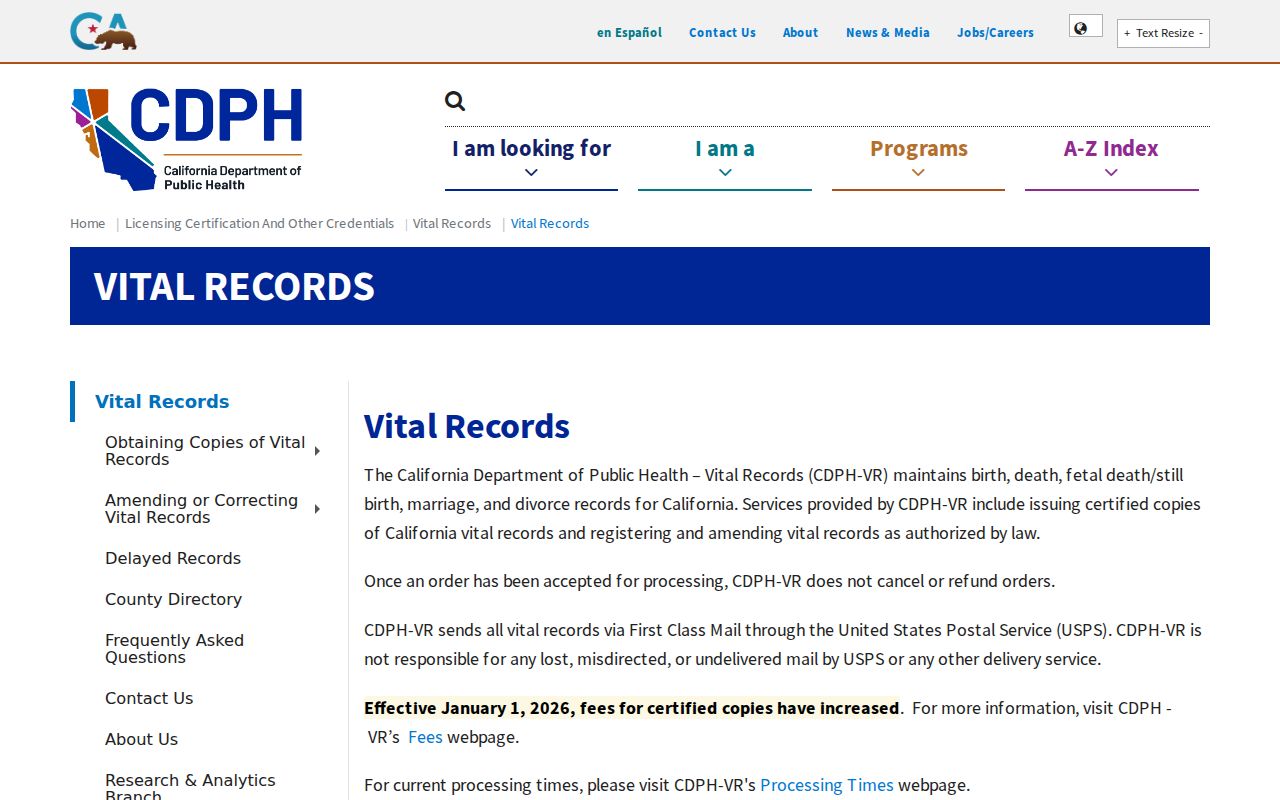
The state route adds an official life-event source to the address timeline, while authorized-copy rules still control who may receive a certificate and what it can establish.
An obituary or probate endpoint does not prove that the person occupied the address throughout life. It closes one branch of the search. Keep the address date, source type, and role in the final timeline.
Lawful Garden Grove Previous Residents
House-history research is a lawful personal use when it stays tied to a parcel, a documented family question, an estate, or a historical inquiry. Public availability does not authorize a search meant to expose, track, threaten, or harm a living person. Protected addresses, sealed adoption records, confidential court matters, DMV data, and restricted voter products remain outside an ordinary previous-resident search.
Lawful use. Use an address history for family history, estate work, property history, or personal curiosity, and stop at the privacy boundary. Do not use names, addresses, or old household clues to stalk, harass, intimidate, or harm anyone.
A sound conclusion uses role labels such as record owner, listed occupant, tax mailing contact, permit applicant, or heir. It cites the date and custodian for each label. When evidence conflicts, preserve the conflict and ask the originating office for correction or a permitted copy. That discipline keeps a Garden Grove previous-residents trail useful without turning a partial public record into a claim of certainty.